
From zero to strategic advantage
How I built a 10-person design team that saved $7M ARR and drove 17% revenue growth
Case Study | 7 minute read
OVERVIEWWhen I joined NetDocuments in January 2022, the $75M ARR legal tech company was losing deals to competitors who highlighted our poor user experience. Leadership's view of the product experience didn't match what customers experienced. With no organized design function, leadership viewed UX more as a cosmetic expense rather than a strategic investment.
CHALLENGEFlip the product experience from a competitive liability to a strategic advantage
SITUATIONA crisis of perception
My first 90 days focused on diagnosing the problem. Internal interviews revealed that leadership viewed design as primarily aesthetic and based their understanding of the user experience on conversations with buyers and implementation partners, rather than with the attorneys and legal assistants who used the software on a daily basis.
This misalignment between buyer needs and end-user needs remains common in B2B SaaS. Sales wants features that close deals, while product wants capabilities that differentiate us in the market, while design advocates for the people who live in the software every day. Reconciling these perspectives requires evidence that improved user outcomes lead to better business results.
I used data to expose this blind spot. I fielded Nielsen Norman Group's UX Maturity survey, which revealed a 46-point gap between leadership's optimistic self-assessment and the actual state of our capabilities.
I then launched System Usability Scale (SUS) surveys, which quantified the external perception gap: internal employees rated our usability a B+. At the same time, over 800 customers gave it a D. We were biasing our product toward decision makers at the expense of end-users.
When sharing my insights, I framed the findings as competitive risk. I presented the data alongside market intelligence showing that our main competitor was distracted by a lengthy platform migration effort. If we improve the user experience while they are looking inward, we could turn a weakness into a competitive advantage. Leadership started asking how fast we could move.
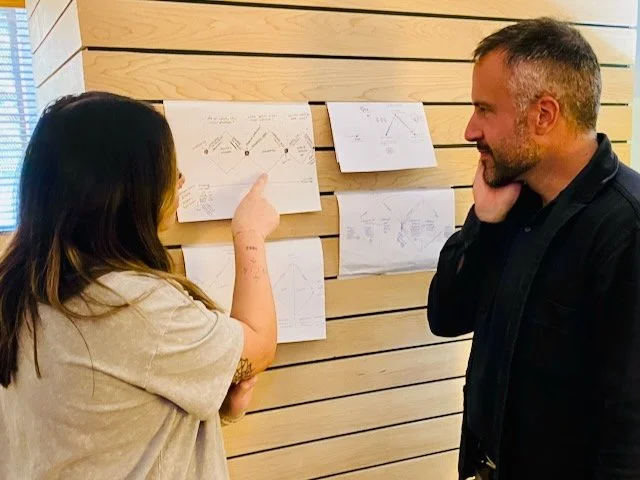
WHERE DOES DESIGN FIT?Upon joining NetDocuments, one of my top priorities was to define the role of design within the organization. I led the design team through a series of Design Thinking workshops to clarify our value and operating model. This process highlighted the necessity to shift our influence "left" to actively shape product strategy, rather than just executing it. By mapping our workflows in relation to Product and Engineering, we established a clear collaboration model that served as the foundation for scaling design as a genuine business partner.
PHASE 1Building the foundation while proving ROI
My first task was to build a team and establish credibility. I decided to hire internally first, transitioning three high-potential, design-oriented employees into design roles. This move leveraged their domain knowledge and accelerated buy-in from product and engineering. After securing more budget, I augmented this core team with two experienced principal-level designers to take on more complex efforts and boost craft.
Do you hire a few seniors and expect higher-level of craft from each? Or, do you hire more less experienced, sacrifice craft but cover more work? I chose speed over craft because I needed domain knowledge and internal credibility more than I needed design craft. The steep learning curve in our domain was a key factor in my choice. Looking back, I'd make the same decision, but I'd move faster to establish clear skill development paths for the team.
To demonstrate the value of UX, I needed a quick win that offered high rewards with minimal risk. I chose the SSO sign-in flow, which represented 23% of support calls from new customers. A one-day design sprint yielded a validated solution that, upon implementation, virtually eliminated related support calls. This quick win earned an all-hands shout-out from the CEO and helped me secure budget, allowing me to hire additional resources while continuing to establish our core design operations and workflows.
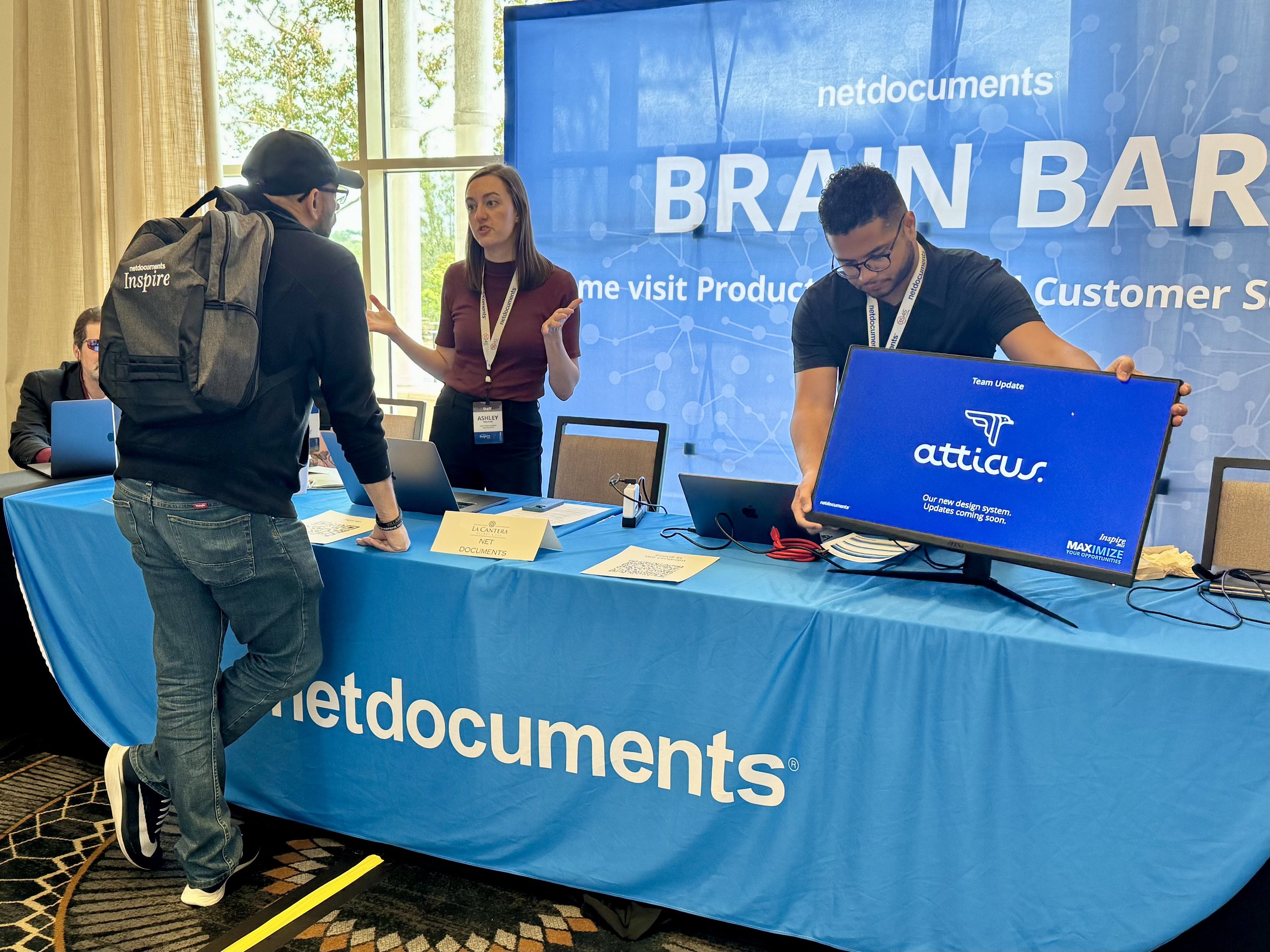
SCALING HEALTHY DESIGN & CODEDesign systems turn one-off design decisions into reusable building blocks that make teams faster and products more consistent. At NetDocuments, our Atticus design system reached 15+ product teams and cut development time up to 40% because engineers stopped rebuilding the same buttons, forms, and layouts over and over. This freed up time to build features customers actually wanted instead of recreating basic UI elements. We also baked accessibility into every component, which improved our compliance scores by 60% without extra retrofitting work.
Phase 2Driving strategic innovation
With a foundation in place, I shifted focus to strategic initiatives. I partnered with the CPO and CTO to pitch a platform-wide, next-generation vision to the board, using a Figma prototype to make the vision tangible.
Simultaneously, I saw an opportunity for design to lead our response to the rise of Generative AI. Multiple teams across the company were experimenting with AI features in isolation. I unified these fragmented, cross-departmental efforts by facilitating a week-long design sprint that aligned product, engineering, and design on a single strategy: our own Legal AI Assistant, which ultimately drove 17% of total company ARR within eight months and established NetDocuments as an innovator in legal AI.
Leading design in this moment required thinking about AI in two ways. First, as a product domain where we needed to establish design principles for how AI should work in legal software. How do we build trust when the technology produces imperfect results? Second, as a capability that would eventually change how my team worked. I didn't have answers to the second question yet, but I knew we needed to learn by building.
To accelerate both efforts, we built Atticus, our first-ever design system, based on Microsoft's Fluent 2 to align with our customers' existing tech stack.
This work earned me a regular seat in strategic planning sessions, and I began presenting regularly at executive off-sites and customer conferences about our design strategy. I spent less time reviewing designs and more time shaping product strategy, representing customer needs in roadmap decisions, and translating business objectives into design problems worth solving.
MEL | SR. PRODUCT DESIGNER“Michael’s leadership style is direct, thoughtful, and encouraging. He guides in a way that helps frame problems, challenges teams to think beyond the obvious, and creates space to explore new ideas.”

LESLEY | SR. USER RESEARCHER“…working with Michael was one of the most rewarding collaborations in that journey. Michael consistently demonstrated a deep respect for research and a genuine curiosity about user behavior.”

JJ | SR. CONTENT STRATEGIST“Michael’s approach to problem solving is always well considered with an eye towards innovation. During our time together, he led our team in launching the company’s first ever design system, setting an exciting benchmark not only for the company, but for the legal tech industry.”

PHASE 3Scaling excellence & embedding design
With growing influence, this phase focused on maturing the design organization for scale. I restructured the team from a centralized to a team-based model, embedding designers directly into product teams. To support this, I hired a Design Director to manage day-to-day execution on our next-generation initiative, which freed me to focus more on strategy.
Although we gained speed and tighter collaboration with product and engineering teams, we risked inconsistency across the experience and losing some of the peer learning that occurred when designers worked side-by-side. I addressed this by establishing team-wide responsibilities: weekly design critiques, maintaining the design system as a shared responsibility, and reserving certain decisions for centralized review and approval. Component design, accessibility standards, and significant interaction patterns fell under my purview, while the individual teams managed all other aspects.
Hiring the Design Director allowed me to better focus on the work only I could do. First, deepening relationships with executive leadership to position design in strategic conversations before decisions were made. Next, identifying emerging opportunities where design could lead, like the accessibility initiative. Lastly, developing the team's capabilities and creating conditions for them to do their best work.
An accessibility program I spearheaded is on track to save $7M in at-risk government and institutional contracts. We also tackled the number-one source of customer complaints, file uploads, by reimagining the entire workflow. The new design reduced related customer complaints by 83% and improved the feature's usability score from a C- to a B+.
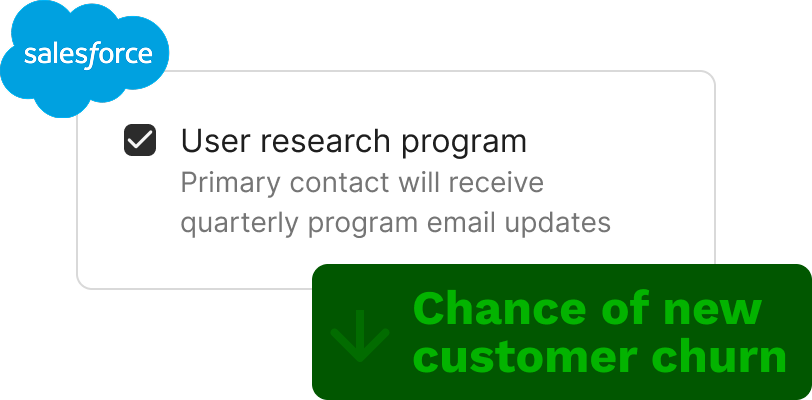
I also scaled our impact by creating a Design Showcase that averaged 110 cross-functional attendees and by migrating our user research program to Salesforce. This migration revealed a powerful insight: customers who participated in user research had significantly higher renewal and expansion rates. This discovery was so impactful that our Business Development team began actively enrolling their top accounts in our research program as a retention strategy, proving design's business value.
I learned something about measurement. The metrics I initially used, such as SUS scores and feature adoption rates, were crucial for demonstrating the design's value internally. The metric that changed executive perception connected design activity to revenue outcomes. Once we showed that research participation correlated with retention, design became a revenue strategy, rather than a necessary cost center. If I were starting over, I'd push harder to identify these business-level connections earlier.
THE TRANSFORMATION IN NUMBERSREFLECTIONWhat I learned about design leadership
Focus on business outcomesDesign leadership requires reframing business constraints as design opportunities. How do we deliver value to users within budget limitations? How do we balance the needs of buyers with those of end-users? How do we prioritize improvements to build momentum? These questions require applying design thinking to the business opportunities and constraints.
Scale design influence My thinking about team building evolved. The most valuable team members were those who combined design skills with the ability to influence within their teams. Design leaders need people who understand when to push for the ideal solution and when to ship something good enough to learn. That judgment comes from appreciating the business context, not just the user problem.
Adapt to AIWatching AI change our product changed my perspective. We built AI features that generated substantial revenue, but we're still learning how AI tools will change design. What I do know is that design leaders who position their teams as strategic partners, who ground their work in business outcomes, and who stay close to market shifts will be better prepared for whatever comes next.
Today, I believe design leadership requires even more comfort with ambiguity and the ability to adapt quickly. Leadership will continue asking harder questions about ROI. AI will continue changing both what we build and how we build it. The designers who thrive will be those who see these pressures not as threats but as opportunities to redefine what and how design contributes.
What began as a defensive measure at NetDocuments evolved into a core strategic advantage, transforming how the company builds products, serves customers, and wins in the market.
Design leaders who understand business will always find ways to create value.